Cafés are pouring violet lattes, feeds are full of colour-changing cups, and “blue tea” is one of the fastest-growing herbal categories — with Asia leading the pour.
What is blue tea, exactly?
It’s butterfly pea flower — Clitoria ternatea — an Ayurvedic brain herb long before it was an aesthetic. The blue is anthocyanin antioxidants, not colouring.
Why is it trending now?
Three currents at once: the caffeine-free wellness wave, the sober-curious drinks movement hunting for beautiful non-alcoholic pours, and a colour trick that markets itself on camera.
How do I avoid the hype versions?
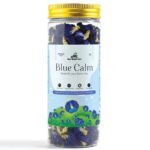
Read the label. Whole dried flowers = the real thing; “blue tea flavour” syrups and powders = the trend without the plant. Whole flowers also re-steep, which powder never does.
Quick facts
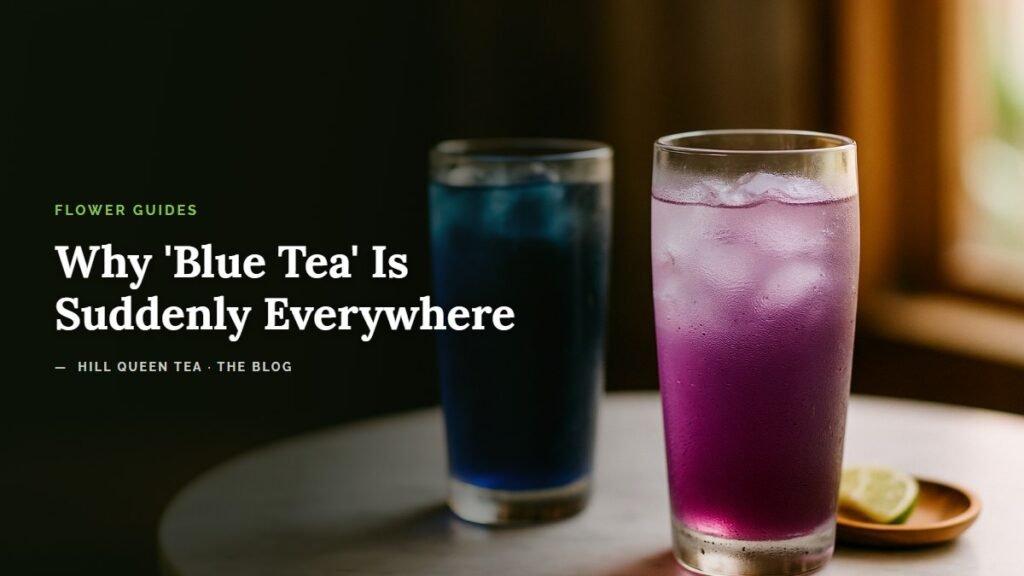
• Butterfly pea is caffeine-free and pH-reactive — lime turns the cup violet.
• Asia-Pacific dominates the blue tea market and it is still growing.
• Whole flowers re-steep; powders and syrups don’t.
The real thing: whole-flower Butterfly Blue Pea →