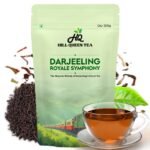
Ask a tea collector for one word on Darjeeling and you’ll hear “muscatel” — a grape-sweet, honeyed depth that only certain summer pickings develop.
What does “second flush” mean?
Darjeeling is picked in flushes — seasons. The first (spring) flush is light and floral; the second (early summer) flush is where leaves develop the deeper muscatel character the region is famous for.
Where does the muscatel note come from?
Tiny leafhoppers nibble the summer leaves; the plant responds with compounds that, after withering and rolling, taste grape-sweet and honeyed. Terroir plus timing — you can’t fake it in a flavouring lab.
How do I taste it properly?
Brew 1 tsp of whole-leaf Darjeeling in 200 ml water just off the boil, 3–4 minutes, no milk. Sip as it cools a little — muscatel shows in the finish.
Quick facts
• Flush = picking season; second flush ≈ May–June.
• Muscatel develops on the slope, not in processing.
• Milk masks it — take the first cup plain.
Taste the hills: the black tea shelf →